
To expand beyond our initial base of software developers, we explored several pairing formats and landed on an interest-based matching system. Users can now indicate whether they want to practice for professional reasons, and we attempt to pair them with someone from the same profession or industry. When that's not possible, we default to shared personal interests. We built and tested a diverse set of conversation prompts spanning topics like travel, personal growth, and video games, ensuring users could connect and practice English through engaging discussions. This approach allowed us to open the platform to a broader audience without waiting until we had enough critical mass in every profession, ultimately resulting in 3 times more people able to use the product.
We also evolved the product beyond one-on-one English conversation sessions by introducing a structured solo practice experience. Users can now access vocabulary, pronunciation, and grammar exercises tied to a learning curriculum, giving them a clear path with measurable progress rather than isolated sessions with no continuity. The system also saves their mistakes and resurfaces them through a spaced repetition algorithm to improve long-term retention.
Testing revealed that users wanted agency over what they practiced, so rather than randomly assigning exercises, we let them choose. I also introduced streaks, goals, and milestones to keep users motivated and give them a tangible sense of progress over time.
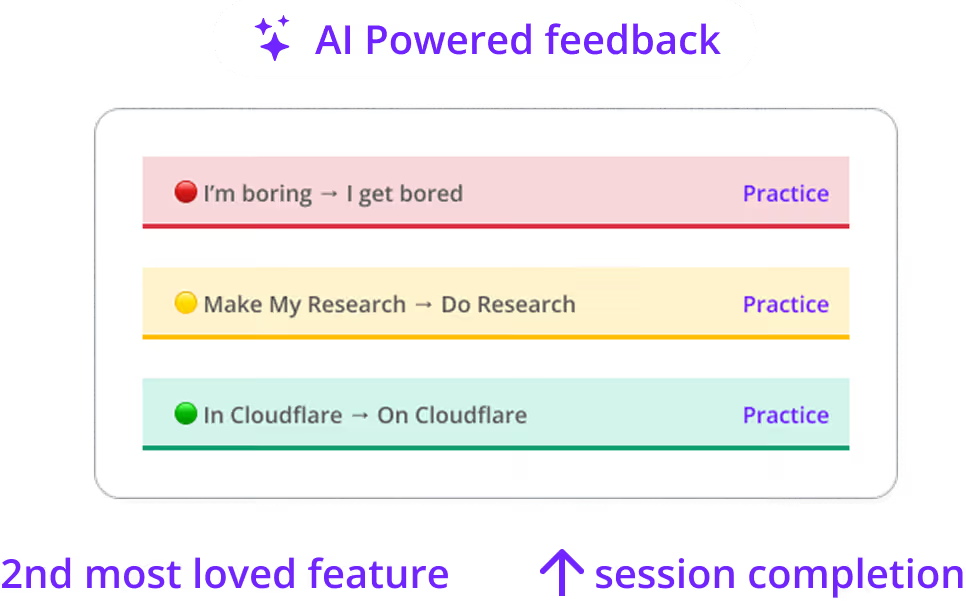
Turning users' biggest concern into one of Leap's most trusted and impactful features.